


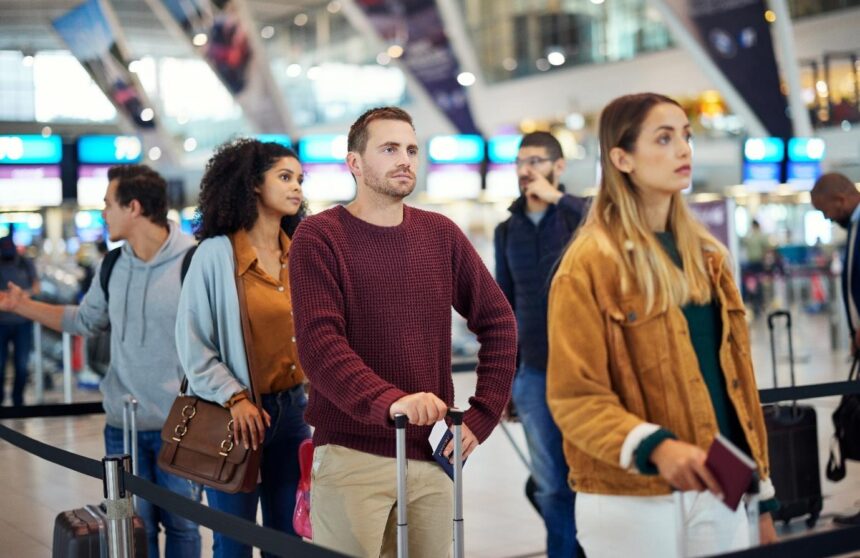
European airports are warning travelers to expect longer waits this summer as the European Union’s new digital border control system enters its first major holiday season. The system, known as the Entry/Exit System, or EES, is now fully operational and is already changing the way non-EU visitors, including UK travelers, pass through border checks.
EES replaces the traditional passport stamping process with digital registration. Travelers from outside the Schengen area must now provide fingerprints, a photo and a passport scan when entering the zone. For many British holidaymakers heading to destinations such as France, Spain, Portugal and Italy, that means using automated kiosks after landing before continuing their journey.
The system is designed to record when travelers enter and leave the Schengen travel area, which covers 29 European countries. While officials say it is meant to improve border management and security, the new process has added time to checks and raised concerns about delays during the busiest travel months.
Since EES began rolling out last year, its performance has been uneven across airports and border points. In some locations, the process has worked smoothly. In others, travelers have faced long waits, particularly during peak periods. Industry groups say delays have been linked to a mix of technical problems, staffing pressure and cases where passengers have had to register their biometric details more than once.
Travel experts are advising passengers to allow extra time and arrive early, especially when flying home to the UK. Some airlines have suggested travelers reach the airport several hours before departure. In some cases, passengers have missed flights because border checks took longer than expected.
Airline responses have also varied. Some carriers say they will wait for delayed passengers when possible, while others have made clear they will not hold flights. That has left travelers facing added uncertainty as the summer travel rush gets underway.
Not all entry points are handling the new system in the same way. At several locations where French border officers carry out checks before travelers leave the UK, the digital process is still being phased in gradually. Border staff are handling part of the procedure manually for now, while the biometric step is not yet fully routine everywhere.
Some ports have already seen congestion, with long queues forming at busy times. In response, some countries are adding more border staff and preparing extra measures for the summer. The EU also allows the system to be temporarily suspended in exceptional cases where waiting times become excessive.
The broader border overhaul does not end with EES. The EU is also preparing ETIAS, a separate travel authorization system for visitors from visa-free countries, including the UK. That system is expected to launch near the end of 2026, although the exact date has not yet been confirmed.
For now, the main concern is whether EES can handle the summer travel surge without causing major disruption. Travelers heading to Europe are being urged to plan ahead, follow airline guidance and expect slower border checks than in previous years.